
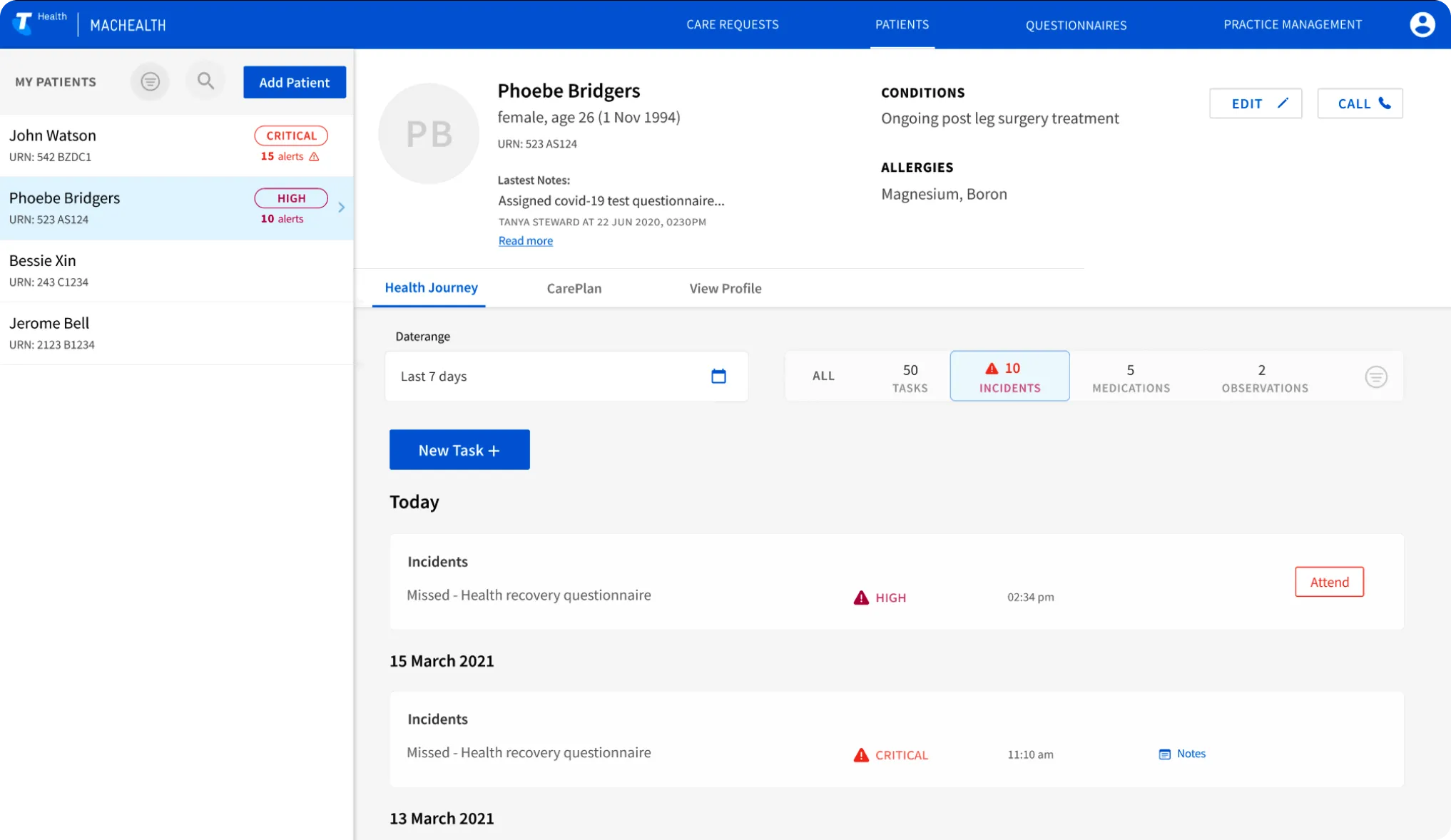
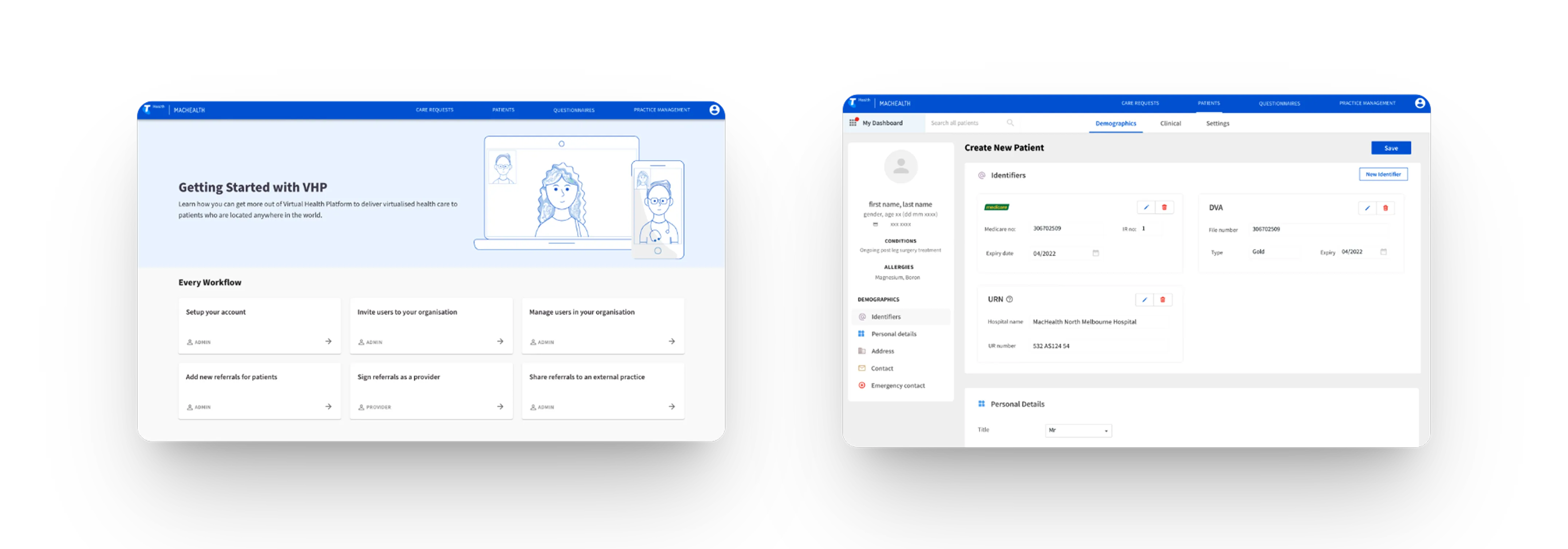
From a design perspective, my role was to lead the transformation of these complex clinical workflows into a digital experience that was simple and accessible for hospitals and clinics of all sizes. I guided the design of the platform from concept to delivery which had multiple touchpoints that focused on creating an intuitive system that clinicians could trust, helping over 2 million Australians access care when they needed it most.
The challenge
The core challenge was to translate complex clinical workflows into a simple, safe, and reliable digital platform. It needed to be intuitive enough for a small community health practice to adopt easily, yet robust enough to be used by large hospitals. We had to figure out how to design a system that clinicians could trust with patient care, especially when they couldn't be in the same room.
My role and design approach
As the design lead, I guided my team through this problem. Here is how we approached it.
A standard design sprint wasn't going to cut it for healthcare. I modified our process to include clinical safety checks, running two-week sprints followed by testing cycles with both clinicians and patients to make sure our solutions were safe and practical.
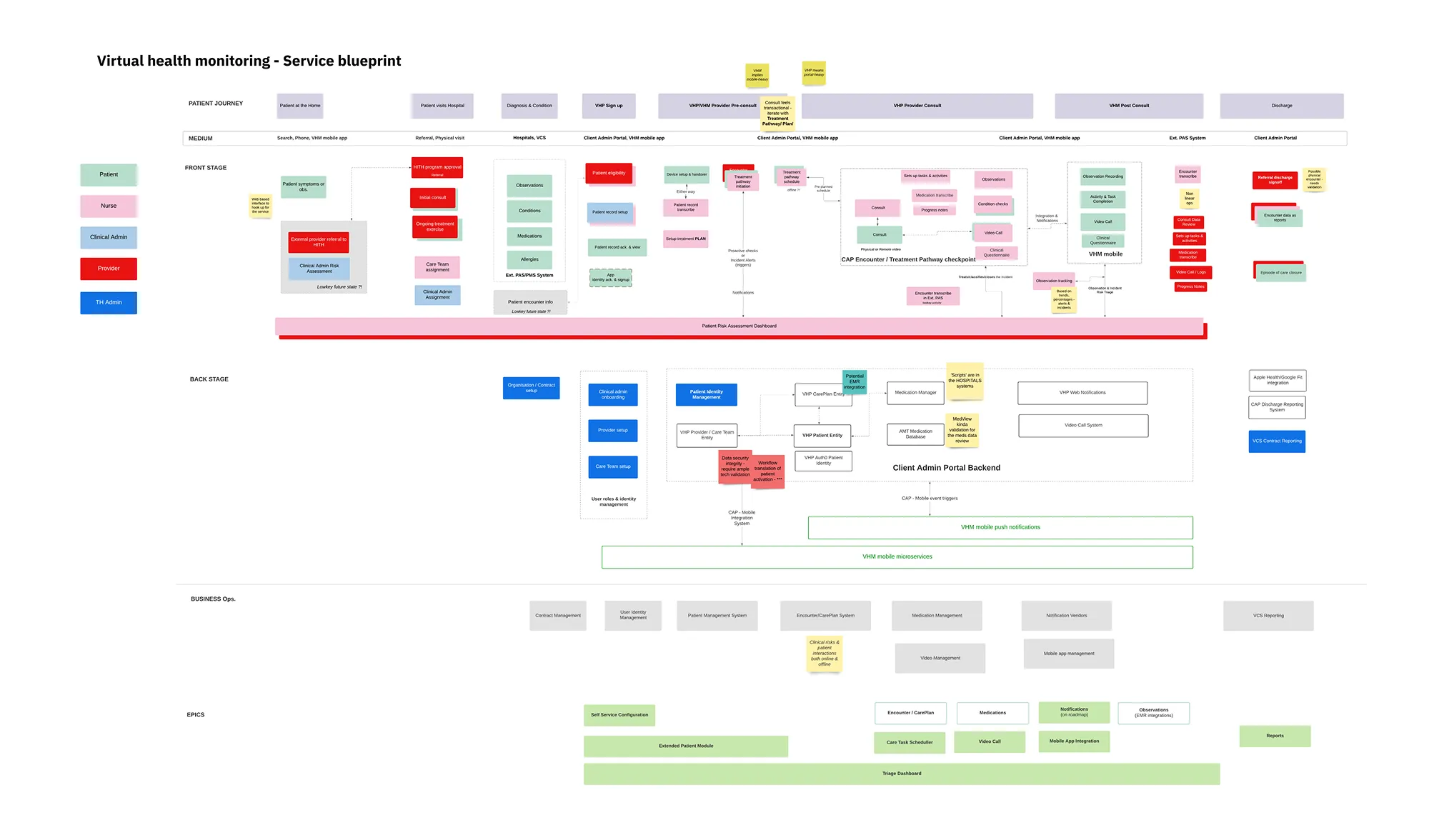
We used service design blueprints to map out the entire virtual care experience. This helped us look beyond the screen and understand the operational pressures on clinicians and the anxieties of patients.
I worked closely with clinicians, engineers, and product managers. We ran workshops to break down complex workflows and tested interactive prototypes directly with healthcare providers to get their feedback early and often. This collaboration was essential. The clinicians caught things we would have missed.
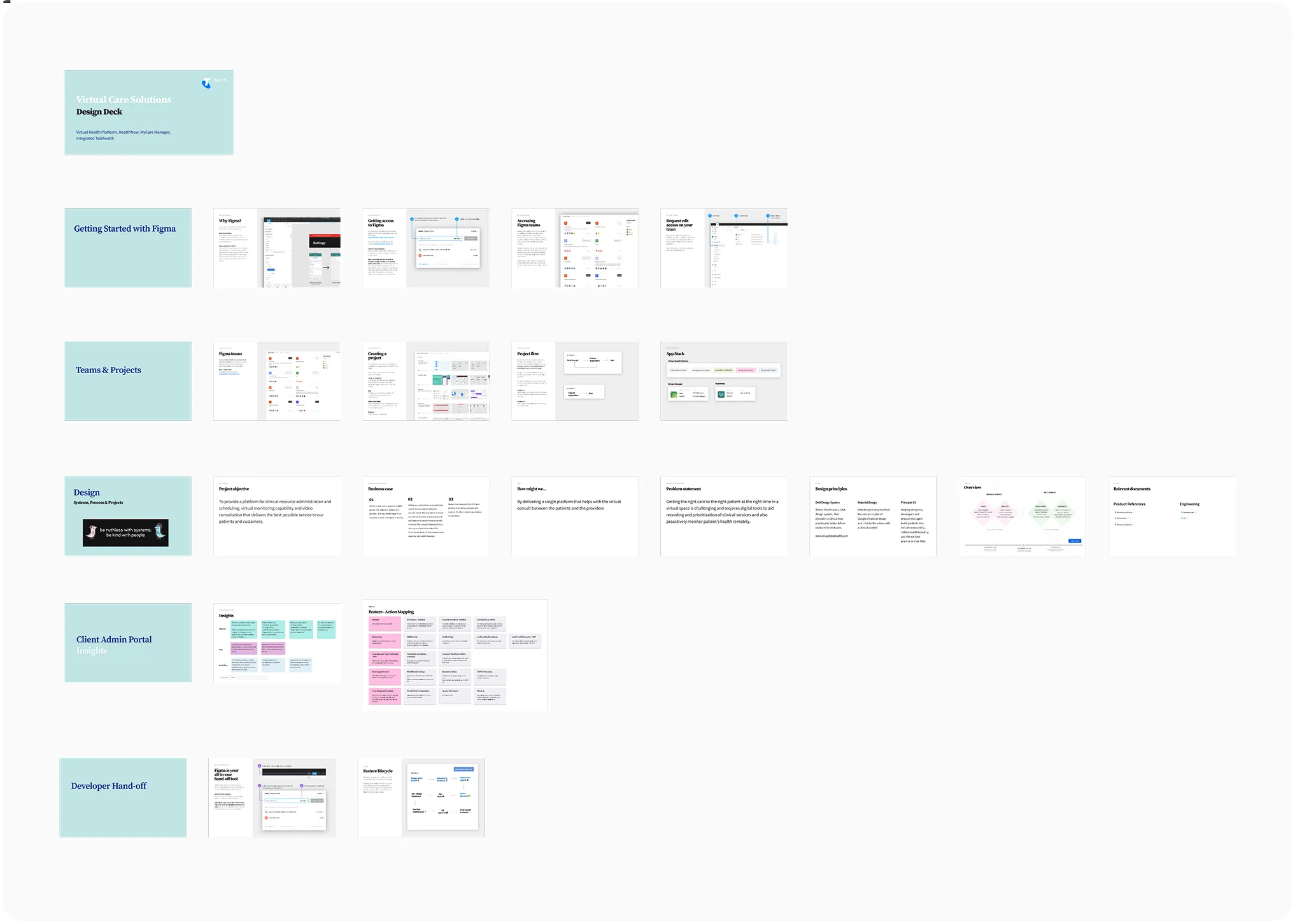
I helped establish 'DNA', Telstra Health's design system. For the Virtual Health Platform, we created a library of over 100 reusable components. Each one was visually consistent and tested against clinical safety and accessibility standards, which let us build faster without cutting corners on quality.
Outcomes
The platform scaled rapidly to support over 1,700 healthcare providers and close to 50,000 patients. It facilitated over 2,277 specialist video consultations and enabled remote management of 7,200+ medical devices in patients' homes. Patient adoption grew 200%, and the platform became a core piece of Australia's health infrastructure during the pandemic. The design system we built also outlasted the initial project, giving future teams a consistent and clinically validated foundation to build on.
What I learned
Designing for healthcare means every decision, even small ones, gets filtered through clinical safety and patient well-being. The best solutions came from working alongside the clinicians who used the tools daily. They understood the edge cases and risks in ways our team couldn't on our own.