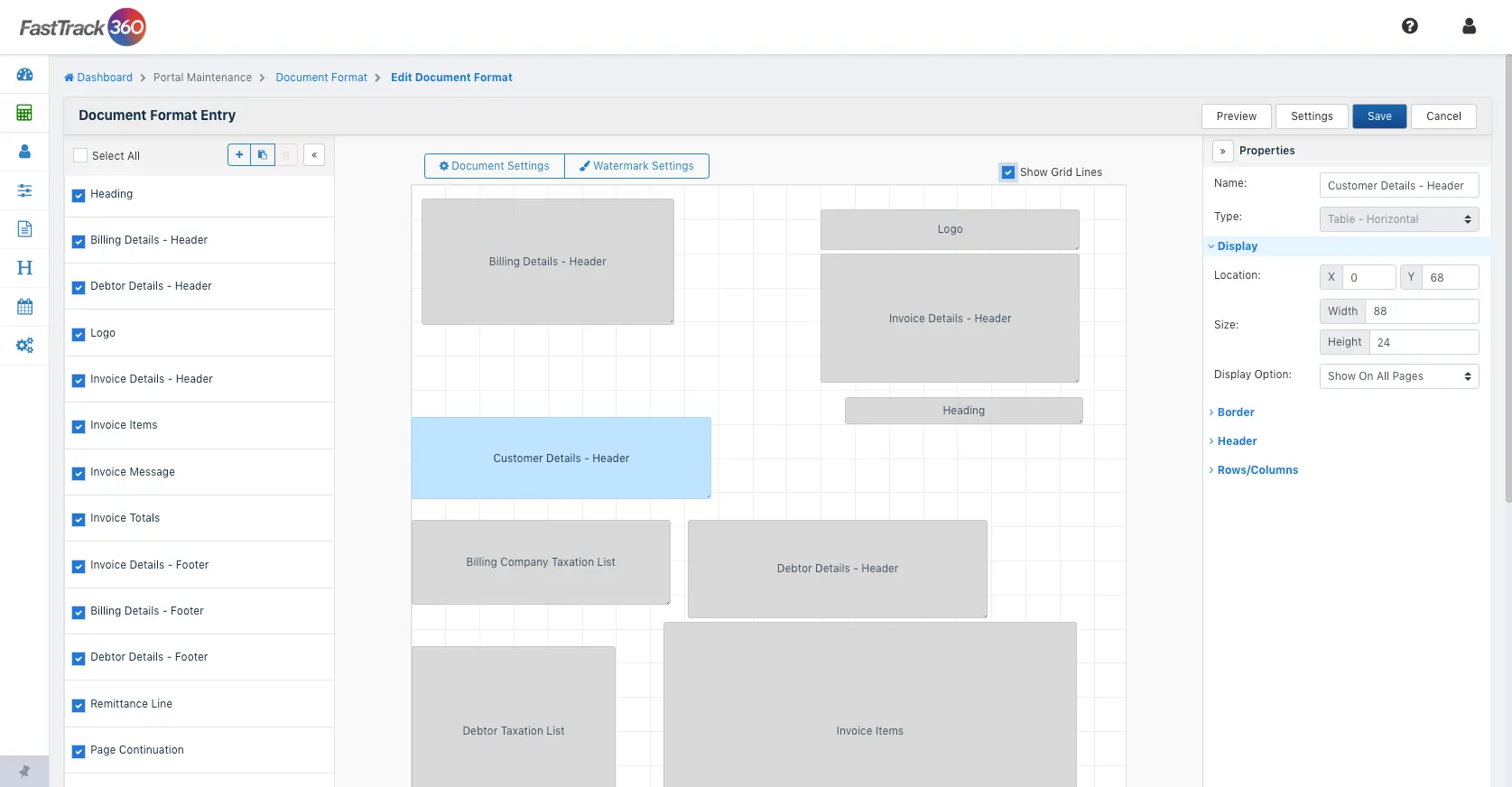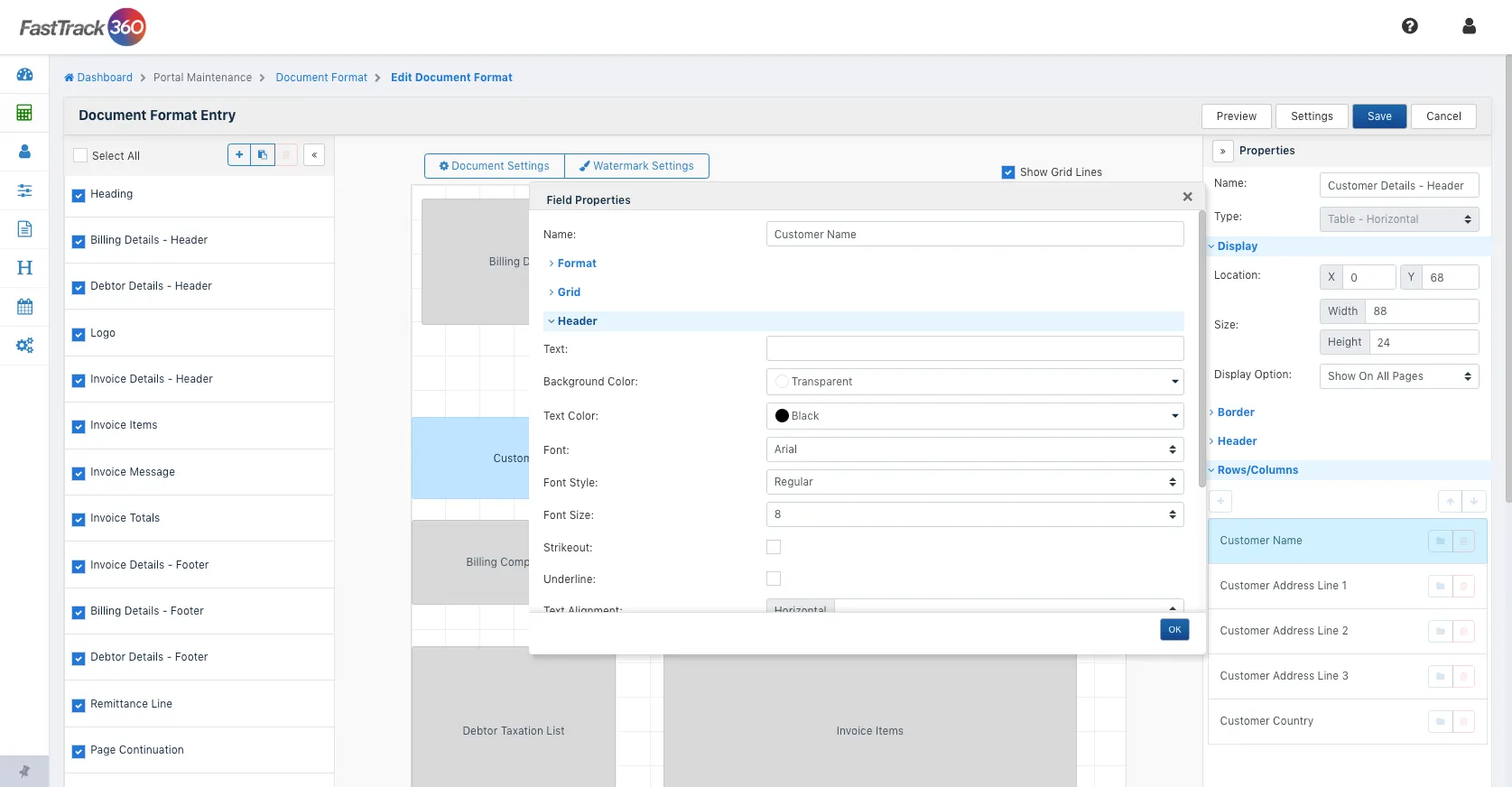
My goal at FastTrack360 as a Lead Product Designer was to improve the overall UX, create a new codified design system, and rethink form handling so that capturing information was faster with fewer errors. I also worked closely with the engineering team to build the custom document editor, which we iterated on directly with customers.
The challenge
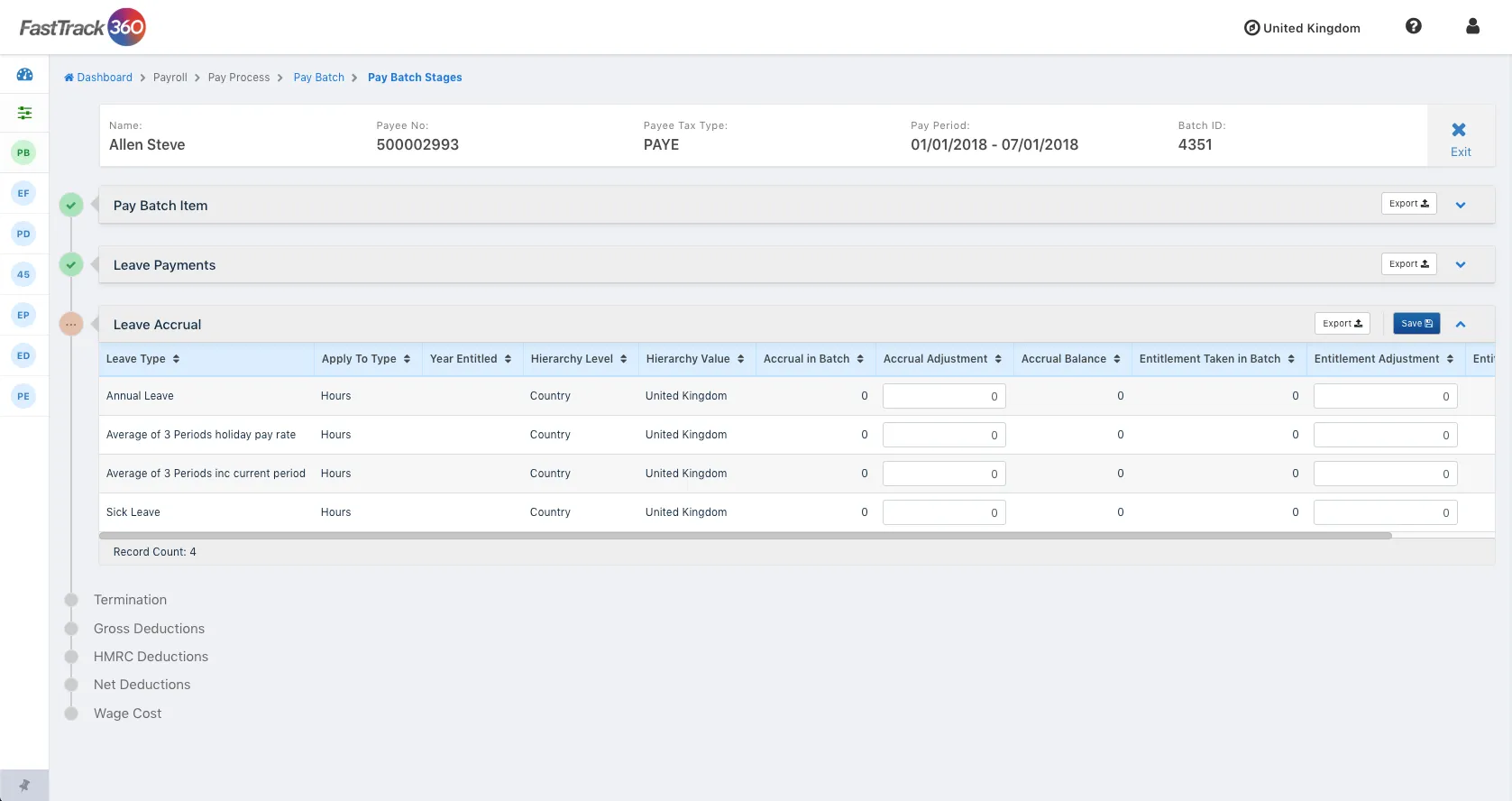
The core of FastTrack360's Back Office product ran on legacy Microsoft Silverlight. It was powerful but dated, and hard to use. Our team's job was to rebuild the whole workflow as a modern, cloud-based web product, and rethink how people worked with complex data so they'd make fewer errors and spend less time on admin.
My role
As the Lead Product Designer, I was responsible for shaping the user experience of the new platform and grounding design decisions in user needs and business goals.
I led the redesign of critical workflows, starting with continual product research and synthesis. We methodically mapped features into deliverable modules that could be tested iteratively with end users, establishing a tight feedback loop with the customer-engagement team and real users.
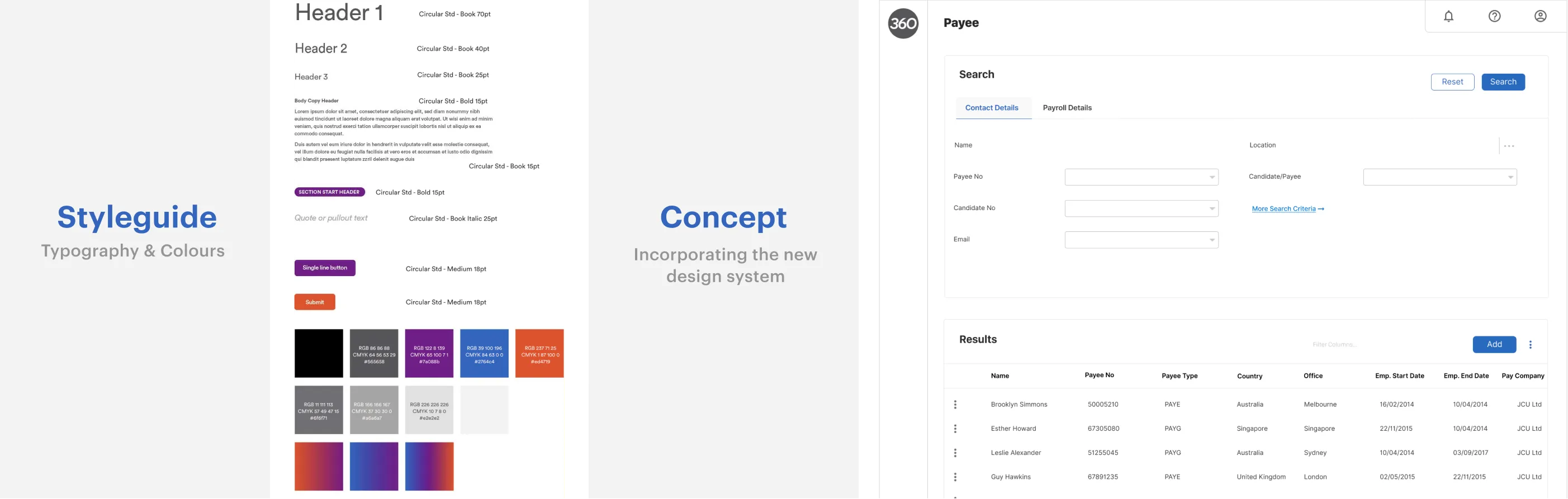
I kicked off and led a new design system, pulling the scattered components from across the legacy product into one library so the experience stayed consistent as we added features.
To get past assumptions, we added analytics to see how people actually used the product. That showed us where they got stuck, and where there was room to grow.
I led the design of the Document Editor, a feature for creating complex document templates. The challenge was encapsulating complicated business rules into a simple drag-and-drop interface, giving users control over both the design and the underlying logic of their billing and payment forms.
Outcomes
We transitioned core workflows from a dated Silverlight application to a scalable, cloud-based web product, significantly improving the user experience. The design system enabled the team to build new features more efficiently and consistently, with a quicker feedback loop and a more coherent product.
The Document Editor turned into a real selling point. Customers could manage complex documents far more easily, which hit a major pain point head-on. And by folding research and analytics into how we worked, we moved to data-informed decisions and found new places to grow the product.
The document editor
The document editor is one of the flagship features, the place customers view, edit, and share the templates behind all their billing and payment forms. Under the hood it wraps complex business rules in a simple drag-and-drop module: every time you drag an element onto the canvas, its rules come with it, and you can adjust both the design and the rule itself. It also handles version history, information and user-role configuration, and image publishing.