
My role was to implement a user-centred approach in leading the design research that defined the commuters’ problems. I closely collaborated with UX Designers, Product Managers, and government stakeholders, ensuring design decisions were evidence-based and empathetic to daily network users. My role also involved designing solutions and overcoming technical constraints to deliver features across the transport's digital web and mobile apps.
The challenge
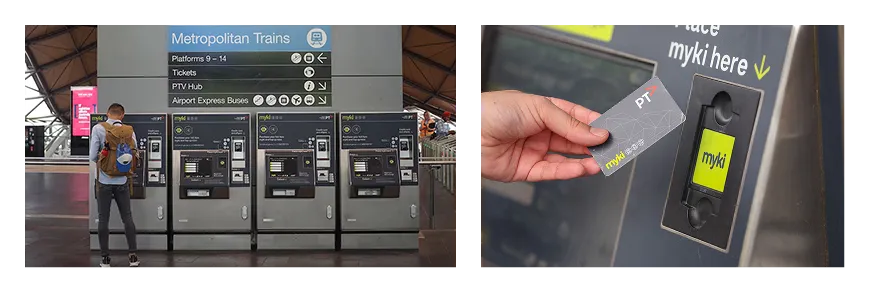
For millions of Victorians, the daily task of managing and topping up a myki card was a source of constant frustration. We had to design a simple, modern solution on top of the myki system, a platform with a history of $1.55 billion in costs and over 205,000 documented user complaints. The challenge was twofold: solve a critical usability problem for over 450 million annual passenger trips while simultaneously navigating the technical constraints of mobile NFC technology and government infrastructure. The onset of the COVID-19 pandemic added a new layer of urgency, highlighting the critical need for contactless solutions.
My role and research approach
As a Senior UX Researcher and Designer, I was responsible for the end-to-end user experience, from initial investigation to final design delivery. I worked closely with a Senior UX Designer on the design prototypes and specifications.
I started with a comprehensive discovery phase. Synthesising historical data (like the Auditor-General's reports) with new qualitative research helped me frame the problem as more than a usability issue. It was a crisis of user trust. This evidence-based framing was critical for aligning stakeholders ranging from the Department of Transport to private operators around a shared understanding of what commuters were dealing with.
I designed and ran a mixed-methods research plan to understand needs across the 300km myki network. This included contextual inquiries at stations, surveys on post-COVID travel patterns, and remote usability testing. At least 20% of our testing participants were people with disabilities, because the design had to work for everyone.
The research directly shaped the mobile experience. I created user flows, wireframes, and interactive prototypes focused on simplicity and clarity. One of the harder design challenges was handling errors and edge cases in a way that built confidence, especially given the legacy system only met performance targets 86% of the time. I worked directly with engineering teams to make sure our designs were feasible within the constraints of NFC technology and the Apple and Google platform requirements.
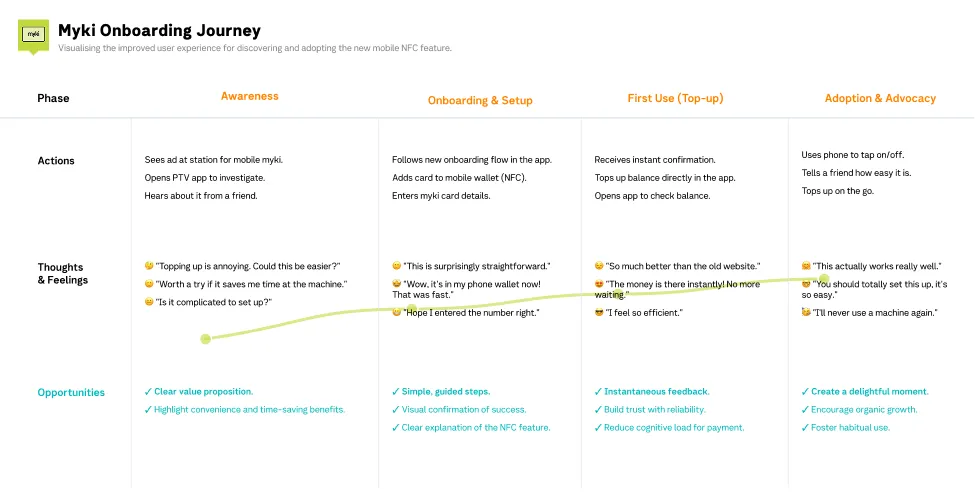
Another critical part of the project was improving the myki onboarding experience. I redesigned the web flow to be clearer and easier to follow, then extended that work to the mobile apps. The new onboarding sequence improved the overall process while also introducing and explaining the NFC top-up feature, making it easy to find and encouraging people to try it.
Delivery spanned multiple platforms: the PTV web app and native Android and iOS apps. Working alongside another UX designer, I collaborated with the Product Managers of each platform team to plan implementation over several agile sprints. A key part of this was updating the existing design system with the new components and patterns we created, keeping the experience consistent across all platforms.
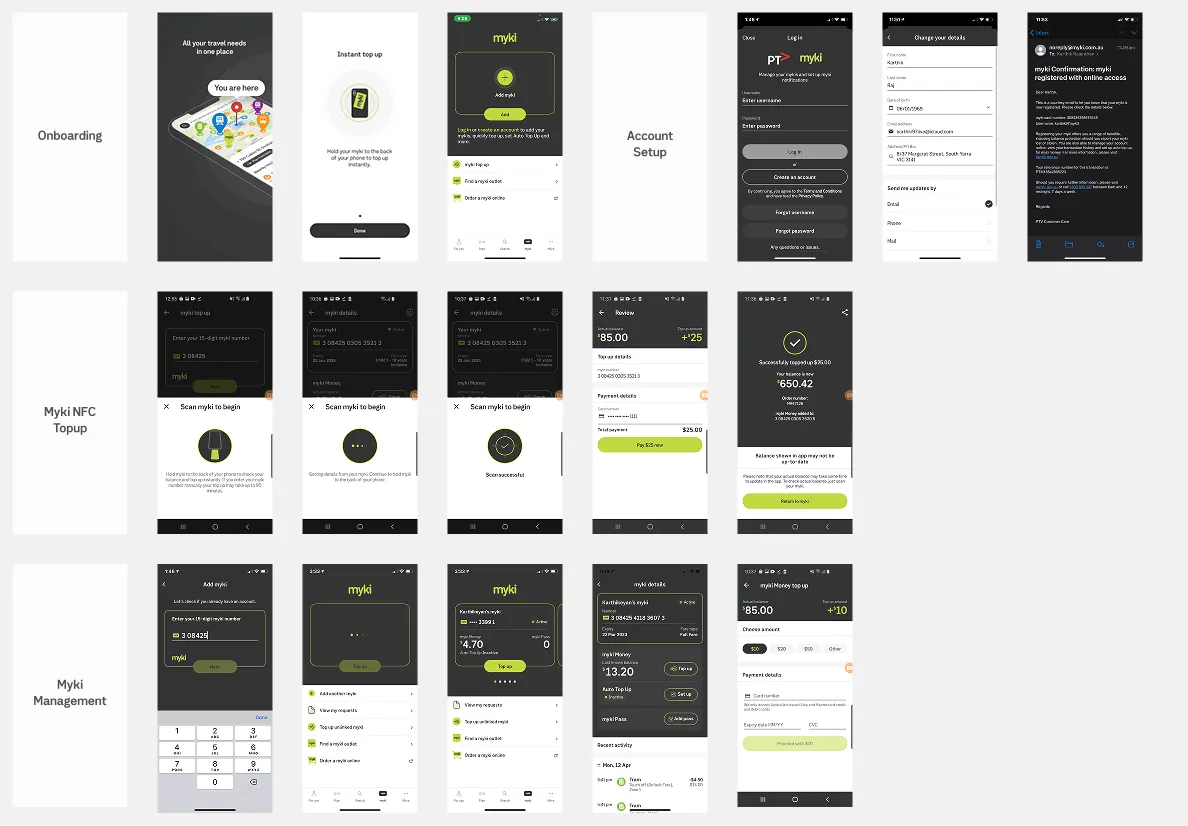
As a designer, my job was to turn research into something we could build. I facilitated design workshops, presented prototypes to stakeholders for feedback, and created detailed design specifications for the development teams. The final product was a direct response to validated commuter needs.
By the numbers
- $1.55 billion, the historical cost of the myki system, which made an evidence-based approach essential for de-risking the project
- 205,000+ documented user complaints, giving us a clear mandate for redesign
- 450 million+ annual passenger trips across the network
- 40% of workers on a hybrid schedule post-COVID, which reshaped how we thought about commuter patterns
- 20,000 new payment readers planned for the network, a key technical constraint our mobile solution had to work with
- 3-6 months for the initial Discovery phase, following government digital service standards
Outcomes
The research and iterative design process gave the team the evidence needed to make critical technology and experience decisions, reducing the risk of costly errors on a high-profile government initiative. The final product was designed for the full population, including users with disabilities and people with lower digital confidence.
By building a shared, evidence-based understanding of commuter needs, the work helped align stakeholders across the Department of Transport and private operators around a common goal. The research methods and design practices we established also set a new baseline for digital service delivery within PTV.
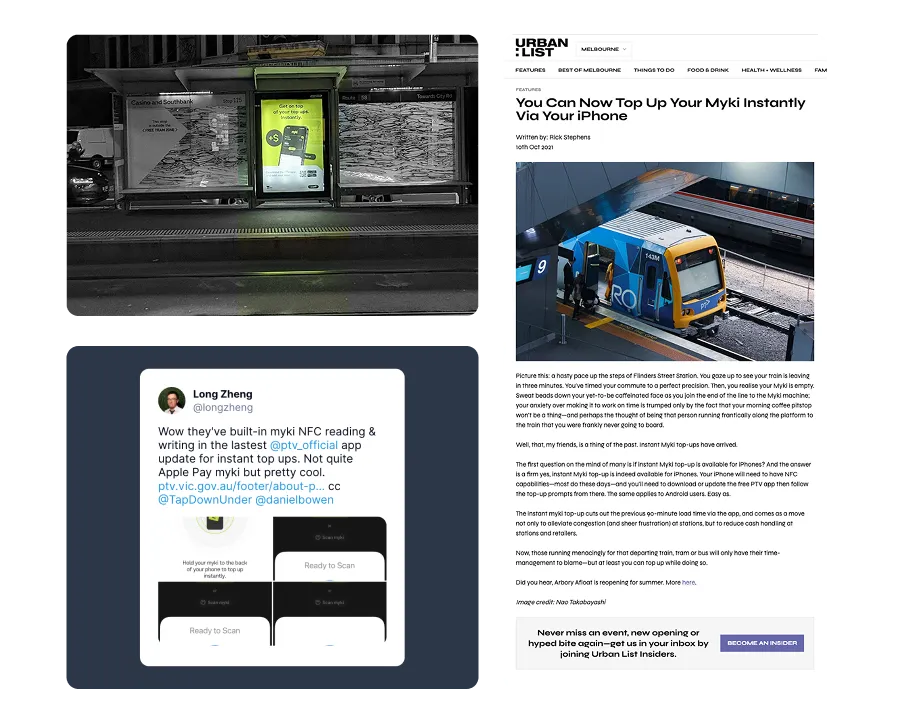
Looking back, what made this project work was staying focused on the commuter's actual journey, from the initial frustration of topping up a myki card to a simple NFC tap on a phone. It was a large, complex engagement, but the research kept us grounded in real problems rather than assumptions.