


I keep coming back to that Nielsen Norman Group video where Kara Pernice talks about choosing research methods based on what you actually need to know, not just defaulting to usability testing. Working on PTV's ticketing platform taught me something important: it's not just about picking the right method, it's about how different approaches fundamentally alter what you discover about users.
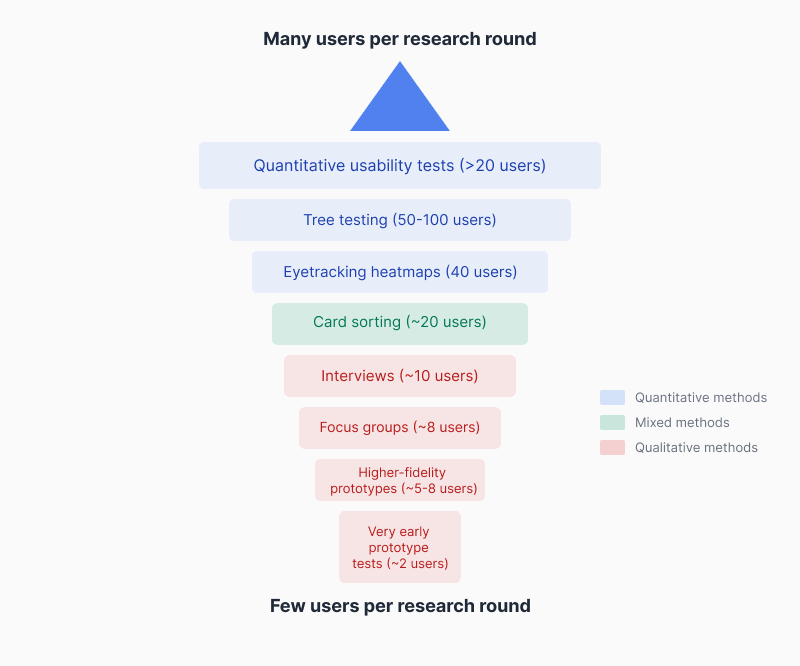
When Small Groups Feel Like Discovery
Testing PTV's mobile ticketing flow with 5 users feels like exploration. You're not measuring patterns; you're uncovering mental models. In one early prototype session, both participants completely ignored our "obvious" journey planner, instead tapping station names repeatedly. This wasn't user error, it revealed how commuters actually think about their trips: destination-first, not route-first.
The psychology here is fascinating: small groups encourage genuine confusion and natural behaviour. Users feel comfortable being "wrong" because they sense they're helping shape something rather than being evaluated on it.
When Large Studies Become Performance
Scale up to 40+ users, and something shifts. People become aware they're being measured, subtly altering their behaviour. When we tested route planning with quantitative methods, completion rates looked brilliant, 92% success. But we'd lost the nuanced insights about why users struggled with timing displays, information that only surfaced in those intimate early sessions.
The Nielsen framework maps this perfectly: behavioural vs. attitudinal research answers fundamentally different questions. But here's what gets missed, participant count doesn't just affect sample size, it shapes what type of insights you can even access.
The next time I'm questioning product-market fit, I'll remember this: how we choose to look at users fundamentally shapes what we'll see, and what we'll build.